
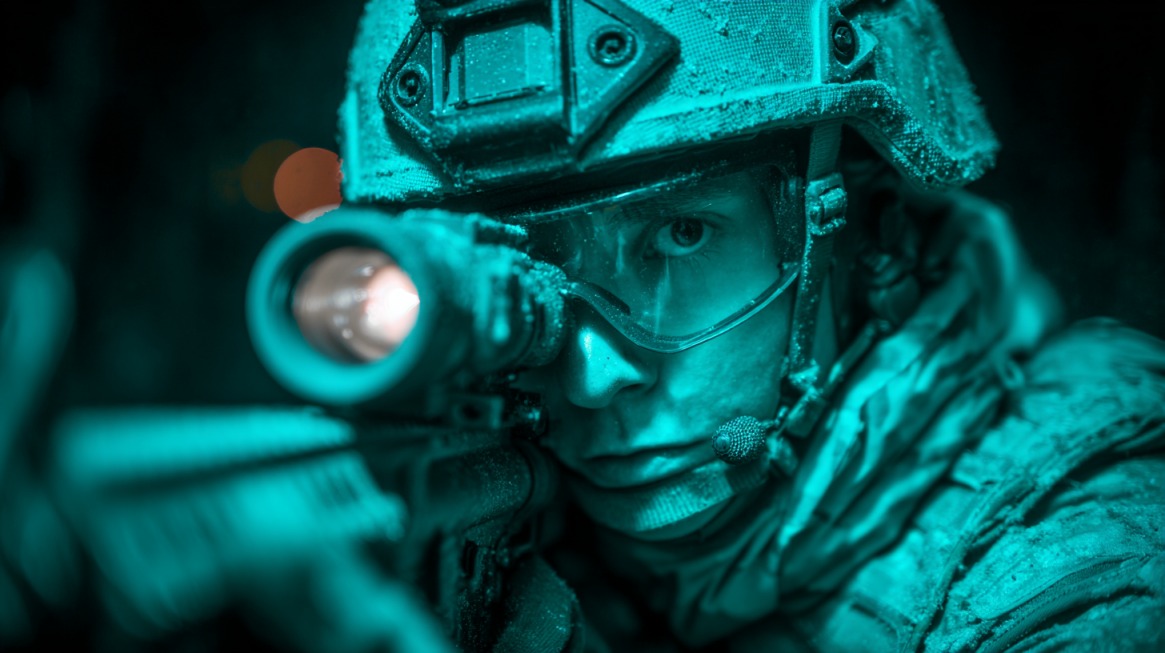
Night vision technology has fundamentally reshaped modern warfare. Its introduction provided a groundbreaking shift in how military operations are conducted, especially during low-light conditions.
The US Army has continually pushed the boundaries of this technology, using it to gain a decisive advantage in combat scenarios.
With decades of advancements, night vision devices have evolved into indispensable tools for soldiers, improving precision and operational effectiveness.
Early Developments in Night Vision Technology
The origins of night vision technology can be traced back to World War II when the pressing need for improved visibility in darkness became evident.
Feature
German “Vampir” System
US “Sniper Scopes”
Technology
Infrared-based device
Infrared-based device
Light Source
Required an external light source for illumination
Required an external light source for illumination
Primary Use
Snipers and infantry for target acquisition
Improving accuracy in nighttime engagements
Size and Practicality
Bulky and impractical for broader applications
Faced challenges in size, weight, and energy consumption
These early devices shared a reliance on active infrared technology. While groundbreaking at the time, the requirement for an external light source posed significant risks.
The emitted light could expose soldiers to enemy detection, reducing the tactical advantage.
Limitations of Early Infrared Devices
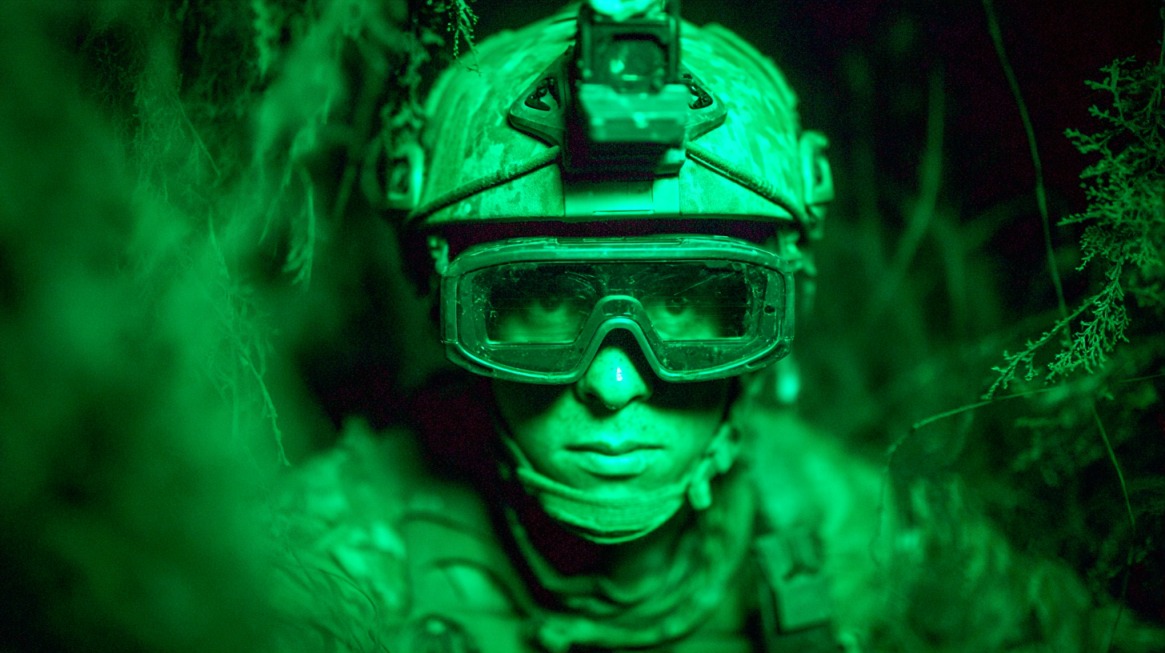
- Cumbersome equipment hinders mobility.
- High energy demands, limiting operational duration.
- Vulnerability to detection due to emitted infrared light.
These issues highlighted the need for lighter, more efficient, and stealthier solutions.
Nonetheless, these early devices demonstrated the possibilities of night vision and laid the foundation for subsequent advancements.
The Transition to Passive Systems
Recognizing the limitations of active infrared devices, researchers began exploring alternative approaches. This marked the transition toward passive night vision systems, which relied on amplifying existing ambient light rather than emitting infrared light.
These initial efforts, while imperfect, catalyzed continuous innovation. The groundwork laid during this era became instrumental in shaping the future of night vision technology, leading to the highly advanced systems used today. Night vision technology has continuously evolved, with each generation bringing significant improvements over the previous ones. Below is a detailed exploration of the technological progress across generations. The first generation of night vision, known as Generation 0, relied heavily on active infrared technology. These systems required an external infrared light source to illuminate targets. Although Generation 0 systems were groundbreaking in their era, they highlighted the need for more advanced solutions. The introduction of Generation 1 technology marked a shift toward passive systems. Devices like the AN/PVS-1 “Starlight” scope amplified ambient light, such as starlight or moonlight, to enable visibility in darkness. While Generation 1 systems were a major step forward, their limitations spurred further innovation. Generation 2 night vision technology represented a significant leap in performance and usability. The addition of micro-channel plates greatly enhanced image intensification, leading to better clarity and range. This generation proved instrumental in demonstrating the full potential of night vision in diverse combat environments. Generation 3 night vision systems introduced cutting-edge advancements that remain the benchmark in military applications. These systems deliver exceptional clarity even in near-total darkness, offering unmatched performance in modern warfare. Initially, it referred to filmless image intensifier tubes developed in the late 1990s, aiming to enhance performance by removing the ion barrier film present in Generation 3 devices. However, these filmless tubes encountered durability issues, leading to their reclassification as “Gen III Filmless” by the early 2000s. These advancements have led to several operational benefits: Despite these improvements, it’s important to note that the U.S. military does not officially recognize a “Generation 4” classification. Instead, devices with these advanced features are categorized under enhanced Generation 3 specifications, often referred to as Gen III+ or Gen III OMNI VII-IX. Night vision technology has transformed combat operations, granting forces unmatched dominance during nighttime engagements. The ability to observe, identify, and engage targets in low-light or no-light conditions offers a critical advantage. The capability enables precise, coordinated attacks, often catching opposing forces off-guard. One of the most important contributions of night vision is its ability to drastically reduce errors, such as friendly fire incidents, by improving visibility and target identification. The increased success rates of missions that rely on nighttime operations reflect the reliability of this technology. Furthermore, the psychological impact on adversaries cannot be overlooked. When faced with forces that can operate effectively under the cover of darkness, enemy morale often suffers, creating opportunities for strategic dominance. In modern military operations, night vision is no longer a standalone tool. Its integration with thermal imaging, GPS systems, and augmented reality enhances situational awareness. For example, combined systems allow soldiers to detect heat signatures through obstructions or overlay digital maps onto their visual field, ensuring better navigation and threat assessment in complex terrains. Extensive training programs have been developed to ensure soldiers fully utilize this technology. These programs simulate the challenges of low-light scenarios and teach soldiers how to operate night vision devices effectively in high-stress environments. The development of night vision technology has been driven by the military’s demand for devices that are lighter, more durable, and increasingly efficient. Modern night vision systems have achieved significant advancements, offering compact designs, energy-efficient operation, and the ability to deliver high-resolution imaging even in near-total darkness. These improvements make such systems critical tools for a wide range of military applications. Benefits of Technological Enhancements: Simulated combat scenarios replicate the challenges of low-light conditions, helping troops develop their proficiency and confidence. The importance of night vision technology in modern warfare cannot be overstated. Its integration with other advanced systems underscores its value in combat, reconnaissance, and surveillance. Night vision technology has fundamentally transformed the way military operations are conducted, offering unmatched advantages in low-light conditions. The US Army’s commitment to advancing this technology has solidified its position as a global leader in nighttime combat capabilities. With ongoing innovations and integration with other military tools, the future of night vision technology promises to further enhance operational effectiveness and strategic superiority.
Evolution Through Generations
Generation 0
Generation 1
Generation 2
Generation 3
Generation 4
Impact on Combat Operations
Technological Innovations and Modern Applications
Integration with Advanced Systems
Application in Training and Operations
Last Thoughts
Sources